Applied Anatomy: Using Kinesiology to Design Better Workouts
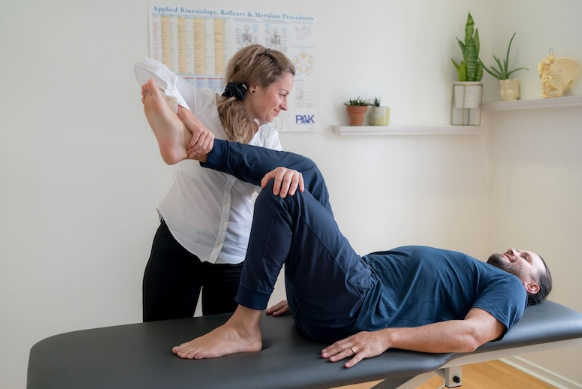
Designing effective workouts goes far beyond choosing popular exercises or following generic training plans. Truly impactful fitness programming is rooted in a deep understanding of how the human body moves. Applied anatomy and kinesiology provide fitness professionals with the tools needed to create workouts that are safer, more efficient, and better aligned with individual client goals.
When instructors understand how muscles, joints, and movement patterns work together, they can design programs that improve performance while reducing the risk of injury. Applied anatomy bridges the gap between theory and practice, transforming textbook knowledge into real-world training strategies.
What Is Applied Anatomy in Fitness?
Applied anatomy focuses on how anatomical structures function during movement. Rather than memorizing muscle names or bone locations, fitness professionals learn how the body behaves during exercise. This includes understanding joint actions, muscle roles, force production, and movement efficiency.
In practical terms, applied anatomy answers questions like:
- Which muscles are working during a squat?
- How does joint positioning affect strength and safety?
- Why do some clients struggle with certain movements?
- How can exercises be modified to match mobility or strength limitations?
By applying anatomical knowledge directly to exercise selection and programming, trainers move beyond guesswork and design workouts based on how the body actually functions.
Understanding Kinesiology and Human Movement
Kinesiology is the study of human movement, combining anatomy, biomechanics, and physiology. It explains how muscles generate force, how joints move through different planes, and how the nervous system controls movement.
Kinesiology helps fitness professionals understand:
- Movement patterns such as pushing, pulling, hinging, squatting, and rotating
- Muscle actions including concentric, eccentric, and isometric contractions
- Joint stability versus mobility
- The relationship between posture and performance
This knowledge allows trainers to identify inefficient movement patterns and correct them through targeted exercise selection and proper cueing.
Why Kinesiology Improves Workout Design
Many workout programs fail because they ignore how the body is meant to move. Kinesiology-based training focuses on movement quality, not just exercise quantity. This approach leads to better results and fewer injuries.
When kinesiology is applied correctly, workouts become:
- More balanced, targeting all major movement patterns
- More individualized, based on biomechanics and limitations
- More effective for strength, endurance, and mobility
- Safer for joints, tendons, and connective tissue
Rather than relying on trial and error, trainers can confidently design programs backed by science and movement principles.
Muscle Function and Exercise Selection
One of the most valuable applications of anatomy is understanding muscle function. Muscles do not work in isolation—they act as prime movers, stabilizers, or synergists depending on the movement.
For example:
- In a squat, the quadriceps extend the knee, the glutes extend the hip, and the core stabilizes the spine
- During a pull-up, the latissimus dorsi drives shoulder adduction while the biceps assist elbow flexion
Knowing these roles allows trainers to choose exercises that target specific goals, whether that is strength development, muscle balance, or rehabilitation support.
This understanding also helps prevent overtraining certain muscles while neglecting others, leading to more symmetrical and functional results.
See also: Running Watch: The Ultimate Guide to Choosing a Powerful Fitness Companion in 2025
Joint Mechanics and Injury Prevention
Applied anatomy is critical for injury prevention. Many common fitness injuries stem from poor joint positioning, limited mobility, or excessive loading on vulnerable structures.
Kinesiology teaches trainers how joints are designed to move and where restrictions often occur. For example:
- The shoulder prioritizes mobility but requires stability support
- The hip is built for powerful movement
- The knee functions best as a stable hinge joint
When workouts respect joint mechanics, stress is distributed appropriately across muscles and connective tissues. This reduces wear and tear while improving movement efficiency.
Trainers who understand joint anatomy can modify exercises for clients with past injuries or mobility limitations without compromising training effectiveness.
Movement Planes and Functional Training
Human movement occurs in three primary planes: sagittal, frontal, and transverse. Many traditional workouts focus heavily on sagittal plane movements, such as squats and lunges, while neglecting lateral and rotational actions.
Applied kinesiology encourages balanced programming across all planes of motion. This approach enhances:
- Athletic performance
- Core stability
- Coordination and balance
- Real-world movement capability
Functional training rooted in anatomy prepares clients for everyday activities and sports, not just gym-based performance.
Individual Differences in Anatomy
No two bodies are exactly the same. Limb length, joint structure, muscle insertion points, and mobility levels all influence how individuals perform exercises. Applied anatomy helps trainers recognize these differences and adjust workouts accordingly.
For example:
- A client with long femurs may squat differently than someone with shorter legs
- Limited ankle mobility can affect squat depth and posture
- Shoulder structure influences overhead movement comfort
Understanding anatomical variation allows trainers to adapt exercises rather than forcing clients into uncomfortable or unsafe positions.
Applied Anatomy in Program Progression
Progression is a key element of effective workout design. Applied anatomy helps trainers determine when and how to increase intensity safely. This includes:
- Gradually increasing load
- Adjusting range of motion
- Introducing more complex movement patterns
- Enhancing stability demands
Rather than progressing randomly, trainers can build programs that respect tissue adaptation and neuromuscular development. This leads to consistent improvements without setbacks.
Education and Professional Development
Developing strong skills in applied anatomy and kinesiology requires structured education. Reputable certification programs emphasize movement science alongside practical training application. Learning how anatomy influences exercise selection elevates a trainer from routine programming to expert-level coaching.
Courses available through www.americansportandfitness.com/collections/fitness-certifications equip fitness professionals with the foundational knowledge needed to design smarter, safer, and more effective workouts. This education supports long-term career growth and enhances professional credibility.
Conclusion: Smarter Workouts Through Science
Applied anatomy and kinesiology are essential tools for modern fitness professionals. By understanding how the body moves, trainers can design workouts that are efficient, individualized, and injury-aware. This science-based approach improves client outcomes, builds trust, and strengthens professional reputation.
In a competitive fitness industry, knowledge sets professionals apart. Trainers who apply anatomical principles to their programming deliver better results, foster long-term client success, and build sustainable careers rooted in expertise rather than trends.